FUT Hair Transplant

Introduction to FUE Hair Transplant Technique

Hair loss is a prevalent issue affecting millions worldwide. With advancements in medical technology, hair transplantation has emerged as a trusted solution for many. One of the most renowned methods in this field is Follicular Unit Transplantation (FUT). This article aims to delve deep into the process, advantages, and more about FUT hair transplantation.

What is FUT Hair Transplantation?

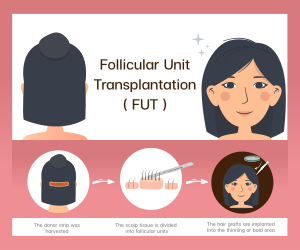
FUT, or Follicular Unit Transplantation, is a technique where hair is transplanted from a patient's donor area, typically located at the back or sides of the scalp, to the regions experiencing hair thinning or loss.

Understanding the Procedure

The FUT method involves a systematic approach:

Donor Strip Extraction: This initial step involves surgically removing a strip of scalp laden with hair follicles from the donor area.

Microscopic Dissection: The extracted strip undergoes careful dissection under a microscope, isolating individual follicular units. These units are naturally occurring groupings of 1-4 hairs.

Recipient Site Creation: The surgeon crafts tiny incisions in the balding scalp areas, determining the best angle, depth, and direction to facilitate a natural appearance post-transplantation.

Transplantation: The dissected follicular units are subsequently implanted into the earlier created incisions.

Healing: After extracting the strip, the donor area is sutured or stapled, leaving a linear scar. Over time, the transplanted hair undergoes shedding—a standard process. However, in a few months, new hair begins growing from the transplanted follicles.

Limitations of FUT

While FUT is effective, it has certain limitations:
- A linear scar remains visible in the donor region.
- The recovery period might extend, proving more uncomfortable than other methods like FUE.
- Short haircuts might expose the linear scar.

Pricing

Please contact us for more information regarding the pricing of FUT.

Advantages of FUT

Follicular Unit Transplantation (FUT) offers several distinct advantages in the realm of hair restoration:

High Volume in Single Session: FUT stands out for its ability to transplant a large number of grafts in just one sitting, making it ideal for those with extensive hair loss.

Optimal Follicle Viability: The method ensures a high yield of healthy follicles due to its precise microscopic dissection, leading to denser and more natural outcomes.

Cost-Effectiveness: For patients seeking treatment for larger bald areas, FUT often presents a more economical option, given the fewer sessions required.

Uniform Hair Density: FUT promotes consistent hair density after transplantation, thanks to the extraction of a uniform hair-bearing strip and its strategic placement.

Proven Track Record: Being a time-tested technique, FUT boasts a history of delivering consistent and satisfactory results.

Recovery After FUT

The post-operative phase following a Follicular Unit Transplantation (FUT) is vital, playing a crucial role in ensuring the success of the transplant and the well-being of the patient.

Immediate Post-Op Care: After the procedure, a secure bandage is typically applied to the donor area by the surgeon. This bandage not only minimizes swelling or bleeding but also safeguards the graft displacement.

Professional Hair Wash: Within a day or two post-surgery, it's advisable for patients to return to the clinic for a professional hair wash. Conducted by trained staff, this wash gently cleanses the scalp, ensuring the newly transplanted grafts remain intact while ridding the area of any residual surgical material or blood.

Stitches Removal: Around 7-14 days after the surgery, patients need the stitches removal from the donor area. This is a standard procedure and is usually quick.

Managing Discomfort and Swelling: It's common for patients to experience some discomfort or swelling in the days succeeding the operation. This can be managed with prescribed pain relievers and headband to reduce swelling of the face.

Protecting the Scalp: During the initial recovery days, it's imperative to shield the scalp from direct sun exposure and potential injuries. A loose hat can be worn when venturing outside, and vigorous activities that might cause sweating or risk of injury should be avoided.

Monitoring the Donor Site: The linear scar from the donor site will initially appear reddish but will fade over time with proper care. The surrounding dense hair will also aid in camouflaging this scar.

Patience During the Process: A noteworthy aspect of the recovery is that the transplanted hair will likely shed within the initial weeks. This shedding is a standard part of the healing process. However, genuine growth from the transplanted follicles will usually commence a few months post-op.

Our Results

Our clinic prides itself on the numerous successful FUT procedures conducted. We invite potential clients to view our before-and-after gallery to witness the transformative effects of FUT hair transplantation.

FAQ's FUT Hair Transplant

Q

Is FUT better than FUE?* 

A

Both methods have their merits. While FUE is a newer technology, FUT may be preferable for certain individuals. A consultation with a qualified surgeon will help determine the best option.

Q

Does the transplanted hair look natural?* 

A

Absolutely! The surgeon ensures natural-looking results by determining the appropriate angle, depth, and direction during transplantation.

Voice From Our Clients FUT Hair Transplant